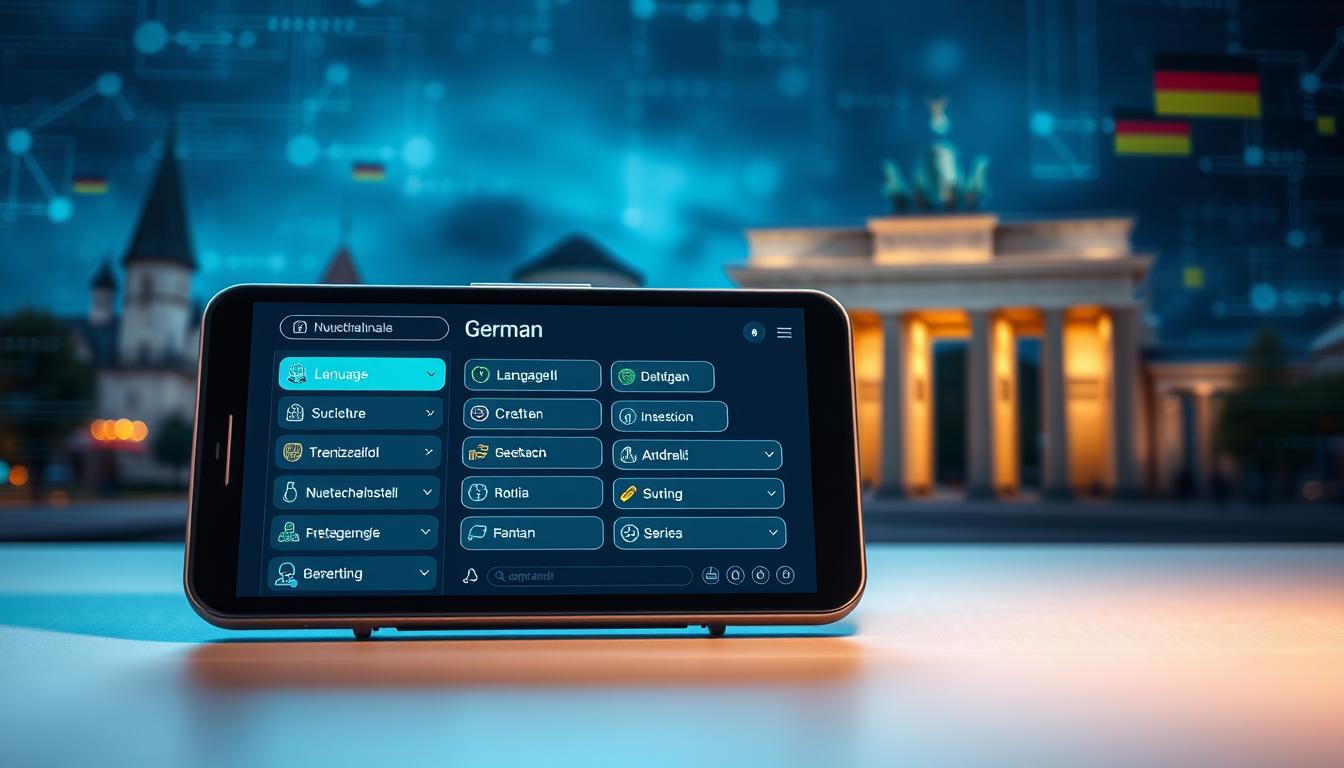
In today’s world, talking to people from different places is key. A multilingual chatbot, like one that speaks German, helps a lot. It makes sure we can talk to German customers easily and in a way that feels right to them.
Using this smart chatbot, we make sure our chats with German clients are smooth. It also makes our talks more meaningful, building trust and loyalty.
Understanding the Importance of Multilingual Chatbots
Multilingual chatbots are key in today’s business world. They help companies talk to customers in many languages. This is vital as global support focuses more on speaking the local language.
Studies show many people like to talk to brands in their own language. This makes it clear that businesses need to use tools that speak many languages. Doing this makes customers happier and more loyal.
These chatbots are essential for smooth communication. They let customers get help without worrying about language. They’re perfect for companies wanting to grow worldwide while keeping a personal touch.
What is a Multilingual Chatbot?
A multilingual chatbot is a software that uses AI to talk in many languages. It’s made to help people communicate better by understanding and speaking in different tongues, like German. It works by using smart language processing and learning to give answers that fit the conversation.
This tool helps businesses talk to more people. An AI chatbot that speaks many languages makes customer service better. It also makes users happier by removing language problems. So, companies see more engagement and happiness with a good multilingual chatbot.
Benefits of Using a Multilingual Chatbot in Customer Support
Using multilingual chatbots in customer support brings many benefits. One key advantage is how they cut down response times. They give quick, accurate answers, making users from different languages happy.
These chatbots also make it easier to engage with customers. They talk in the customer’s language, making them feel at ease. This personal touch is key to building strong relationships with clients.
Another big plus is that chatbots are always on. They work 24/7, helping clients no matter the time. This means we can help without any wait, making our support better.
Lastly, chatbots save money. They can handle lots of questions at once, so we don’t need a huge team. This lets us use our people for harder tasks, while chatbots deal with the easy stuff. Here’s a table showing these benefits:
| Benefits | Details |
|---|---|
| Reduced Response Times | Quick answers lead to higher customer satisfaction. |
| Improved Customer Engagement | Supports communication in the customer’s preferred language. |
| 24/7 Availability | Assistance at any time enhances customer experience. |
| Increased Operational Efficiency | Allowing support staff to focus on complex issues. |
| Cost-Effectiveness | Handles multiple inquiries, minimising workforce expenses. |
Multilingual Chatbot German: Features You Need to Know
Using a multilingual chatbot, like one for German, comes with special features. These features boost its ability and success. We’ll look at how language translation and natural language processing work together for smooth user chats.
Language Translation Capabilities
A multilingual chatbot can translate in real-time. This means users get answers in their own language right away. It keeps conversations clear and cuts down on mistakes.
The chatbot’s smart algorithms figure out what language you’re using. This makes talking to it a lot better. You can ask questions in your own language and get quick, helpful answers.
Natural Language Processing
Natural language processing is key for chatbots to get what you mean. It lets them understand the real meaning behind your words. This makes chats feel more real and fun.
With NLP, the chatbot can give you answers that really fit what you’re asking. This makes you happier with your chat experience. The chatbot really gets what you need.
| Feature | Description | Benefits |
|---|---|---|
| Language Translation | Real-time language conversion enabling effective communication. | Enhances clarity and reduces errors in conversation. |
| Natural Language Processing | Understanding and interpreting user intent and context. | Makes interactions feel more personal and engaging. |
How to Integrate a Multilingual Chatbot into Your Business
Adding a multilingual chatbot to our business can really boost how we talk to customers. A clear plan makes this easier, helping us meet the needs of many users. We can use a detailed guide to make sure we cover everything, from planning to putting it into action.
Step-by-Step Integration Guide
Our integration steps are straightforward:
- Identify Business Needs: First, we need to figure out what we want to achieve with a multilingual chatbot.
- Choose the Right Features: Next, we pick the chatbot’s language and natural language processing features.
- Select Compatible Systems: Then, we check if our current systems work with the chatbot.
- Conduct Testing: Before we launch, we test the chatbot to find and fix any problems.
- Deploy and Monitor: Once it’s live, we keep an eye on how it’s doing and make changes as needed.
Choosing the Right Platform for Your Chatbot
Not all chatbot platforms are the same. When picking one, we should think about:
- Ease of Use: The platform should be easy to use.
- Integration Capabilities: It should work well with our current software and tools.
- Scalability: It should be able to grow with our business.
- Cost-Effectiveness: We need to find a platform that fits our budget but offers good value.
Customising Your German Chatbot for Better Engagement
Customising chatbots is key to a great user experience. It makes users feel important and understood. This boosts how well they interact with the chatbot.
We can change the chatbot’s tone and style to match what users like. For example, using their names or tailoring conversations can make users happier.
It’s also important to use user feedback to improve the chatbot’s answers. By updating the chatbot based on what users say, we make it more helpful. This keeps the chatbot relevant and useful to each user.
Using advanced analytics helps us do this even better. We can see what customers like and use that to make the chatbot better. This way, the chatbot not only answers questions but also connects with users, building loyalty.
Using a Multilingual Chatbot for Diverse Customer Interactions
In today’s global marketplace, it’s key for businesses to engage with diverse customers. A multilingual chatbot is a strong solution for this. It supports many languages and communication styles.
These chatbots let customers talk in their own language, making their experience better. Imagine needing help with a product or solving a problem. A multilingual chatbot can help right away, breaking down language barriers.
Our chatbot handles different customer concerns well, solving problems fast. This builds trust and satisfaction. It also helps us connect with customers from various backgrounds, building strong relationships across markets.
Top Use Cases for Multilingual Chatbots
Multilingual chatbots have changed how we talk to customers in many areas. They make things more efficient and better for users. Here are some examples of how a German chatbot can meet different needs.
Company Formation Assistance
Using a multilingual chatbot when starting a company makes things easier. People get help right away with legal papers, rules, and following the law. It makes a hard process simpler, making users feel supported.
Nominee Services Support
In nominee services, chatbots are very helpful. They help find the right people to be directors or shareholders quickly. They can talk in many languages, helping many people and giving fast help.
Banking and Payment Processing Inquiries
Chatbots are great for banks too. They let customers ask about money, accounts, or how to pay in their own language. This makes banking better, giving quick answers without long waits.

| Use Case | Description | Benefits |
|---|---|---|
| Company Formation Assistance | Guidance through legal processes for starting a business. | Increased efficiency and reduced confusion. |
| Nominee Services Support | Assistance in finding suitable nominees for directorship. | Richer candidate information and timely responses. |
| Banking and Payment Processing Inquiries | Instant support for various banking-related questions. | Enhanced customer satisfaction and reduced wait times. |
SEO Enhancements for Multilingual Chatbots
In today’s digital world, using SEO for chatbots is key to getting them seen online. As more companies use multilingual chatbots, it’s vital to boost their online presence. This helps attract a wide range of people. Making chatbot responses easy to find and use is essential.
By using smart SEO tactics, our multilingual chatbots can help more people. They become visible to those searching for specific things. This makes them not just useful but also easy to find.
One important way to boost visibility is to add keywords to chatbot answers. This makes the chatbot’s content match what users are looking for. Creating engaging answers is also key. It keeps users interested and encourages them to chat longer, which helps with SEO.
Optimising Your Chatbot Responses for Search Engines
To make our chatbot responses better, we should follow these tips:
- Use relevant keywords in answers to match search queries.
- Make sure answers are short but full of useful info.
- Use different keywords to meet various search patterns.
- Keep content fresh with the latest trends and interests.
By using these strategies, we can improve our multilingual chatbots. They will be more than just helpful; they’ll also be easy to find online.
Marketing Your Multilingual Chatbot Effectively
To make our multilingual chatbot reach more people, we need smart marketing plans. We can use social media to share interesting content about our chatbot. This way, we grab the attention of those who might be interested.
Email marketing helps us talk directly to people who might use our chatbot. We can send them messages that show how our chatbot can help. Adding what other users say about our chatbot makes our messages even stronger.
We should try different ways to advertise our chatbot. Our ads should look good and show off what makes our chatbot special. By looking at how well our ads do, we can make them even better.
| Marketing Channel | Strategy | Expected Outcome |
|---|---|---|
| Social Media | Engaging visuals and informative posts | Increased brand awareness |
| Email Marketing | Personalised campaigns with testimonials | Higher conversion rates |
| Online Advertising | Targeted ads highlighting features | Broader audience reach |
| Content Marketing | Blog posts and articles showing benefits | Enhanced customer trust |
Common Challenges in Implementing a Multilingual Chatbot
Setting up a multilingual chatbot is tough for businesses wanting to help customers in many languages. The main problem is the technical side. It’s hard to link the chatbot with current systems, causing delays and uneven user experiences. Also, getting the language right is tricky, as wrong translations can confuse users.
Getting users to accept the chatbot is another big challenge. We must make sure customers are okay with using it. Some might doubt its usefulness. So, we need to listen to what users say to fix any problems and make them happier.
Keeping the chatbot’s language up to date is also key. It might need regular updates to stay relevant and correct. If we don’t tackle these issues, customer trust and interest could drop. Knowing these challenges helps us find better ways to use and keep the chatbot working well.
| Challenge | Details | Potential Solutions |
|---|---|---|
| Technical Integration | Issues with connecting the chatbot to existing systems and databases. | Utilise reliable APIs and ensure thorough testing. |
| User Acceptance | Scepticism regarding the effectiveness of chatbot interactions. | Engage users through surveys and enhance the chatbot’s user experience. |
| Language Accuracy | Inconsistencies in language use and translation quality. | Regularly review and update chatbot language models. |
| Ongoing Maintenance | Challenges related to keeping the chatbot up-to-date. | Have a team for constant monitoring and improvements. |
Future Trends in Multilingual Chatbots
The future of chatbots is set to be exciting and full of change, with a big focus on multilingual services. We’ll explore how AI is changing chatbot technology. These changes help chatbots understand and talk to people from different languages, making communication smoother and more enjoyable.
Advances in Artificial Intelligence
Artificial intelligence is making chatbots better at recognising emotions. This lets chatbots respond in a more caring way. Voice integration is also becoming key, making chatbots feel more like real people.
Adaptive learning is another big step forward. It lets chatbots get better with each conversation. This means they can meet the needs of more customers, making them very useful in many languages.
| Trend | Description | Impact on User Experience |
|---|---|---|
| Emotional Recognition | Ability to understand users’ emotional states. | Makes interactions more personalised and empathetic. |
| Voice Integration | Utilising voice commands for communication. | Enhances convenience and engages users more effectively. |
| Adaptive Learning | Chatbots learn from past interactions. | Improves responses and tailored experiences over time. |
Success Stories: Companies using Multilingual Chatbot German
Many companies have seen great results from using German multilingual chatbots. These stories show how chatbots can make customer experiences better and make things run smoother.
Deutsche Telekom is a great example. They added a chatbot to their customer service. It answers questions in German, making things faster and reducing calls. This made customers happier and more loyal.
TUI, a travel company, also uses a German chatbot. It helps with bookings and answers questions quickly. This has made the user experience better. TUI is now seen as a leader in customer service because of this.
These examples show how chatbots have changed the game for companies. They’ve made things more efficient and made customers happier. It’s clear that using chatbots is a smart move.
Contact LerriHost for Your Multilingual Chatbot Needs
Improving customer experiences is key. A multilingual chatbot service is essential for this. At LerriHost, we offer chatbot solutions in many languages, including German. We help your business communicate well in different languages.
Our services are designed to meet your unique needs. This includes help with company formation and payment processing. These are important for smooth operations.
If you want to improve your customer interactions, contact LerriHost. Our team can show you how our chatbot service fits into your systems. Call us at 07538341308 for more information or to discuss your needs.
Choosing the right chatbot can boost user engagement and make talking to your business easy. Don’t wait to get in touch. See how we can help your business with a top-notch multilingual chatbot.