
Welcome to our detailed guide on setting up a business in Germany for UK entrepreneurs. We will cover the key steps and important things to consider when entering the German market. Our goal is to give you the information you need for a smooth setup.
We will look at the local business environment and the legal steps you must take. Our aim is to make your journey to setting up a company abroad easier.
Understanding the German Business Landscape
The German business scene is known for its stability and strong laws. It has a diverse economy. When we step into this market, it’s key to do a detailed analysis. This helps us spot chances and hurdles.
Germany’s business culture is formal, valuing punctuality and clear talk. Knowing this can really help us succeed. It’s all about building strong connections and getting things right.
People in Germany often choose quality and eco-friendly products. This means businesses need to think about the planet. By doing this, we can win their trust and grow over time.
For a better look at the German business world, check out the German Federal Statistical Office. They have lots of data on the economy. Also, industry reports give us the lowdown on different sectors and what people like to buy.
Why Choose Germany for Business Expansion?
Germany offers many benefits for UK entrepreneurs wanting to grow their businesses. It has a strong industrial base, making it a key player in the global economy. Its location in Europe makes it easy to reach other markets, improving logistics and access.
Germany also has a big consumer market. This means businesses can reach different people and understand their needs better. It’s a great place to find new customers and grow.
Germany’s economy is strong because of its good infrastructure, skilled workers, and focus on innovation. This mix creates a perfect environment for businesses to thrive. The country invests a lot in research and development, staying ahead in technology.
Choosing Germany for business expansion comes with many benefits. Its strong economy and lively market opportunities are ideal for growth and success. Entrepreneurs should think about Germany as a smart choice for their business.
Germany Business Setup: Key Considerations
Setting up a business in Germany requires knowing the legal structures available. Entrepreneurs from the UK have many options. Each has its own benefits and challenges for running a business.
Exploring these legal structures helps us understand the registration process. This can be complex for those new to Germany.
Legal Structures Available
The GmbH (Gesellschaft mit beschränkter Haftung) and AG (Aktiengesellschaft) are the main legal structures. A GmbH needs a minimum of €25,000 in share capital. This makes it a good choice for smaller businesses.
The AG requires at least €50,000 in starting capital. It’s better for bigger businesses or those looking for public investment.
- GmbH: Limited liability structure, ideal for startups.
- AG: Public limited company, suited for larger scale operations.
Taxation Policies and Benefits
Taxation in Germany is a key factor for UK entrepreneurs. The corporate tax rate is about 15%. There’s also a solidarity surcharge and local trade taxes.
Knowing these tax policies helps in planning. Germany’s double taxation treaties with other countries are a big plus. They help avoid being taxed twice on the same income from German subsidiaries.

Navigating Regulations for UK Entrepreneurs
For UK entrepreneurs looking to enter the German market, knowing the German business rules is key. These rules cover everything from starting a company to taxes and employee rights. We’ll look at these rules to make sure we follow both national and local laws.
First, we need to understand the legal setup for our business. Germany has different options like sole traders, partnerships, and companies. Each has its own rules about compliance and who’s responsible, so picking the right one is important.
Protecting our brand and ideas is also vital. We can use trademarks, copyrights, or patents to keep our edge in the German market. Knowing how to register these and the rules around them helps protect our work.
German employment laws are another big area we must get right. From contracts to benefits, following local labour laws is key for a happy and compliant team.
For help with these complex rules, we can turn to the German Federal Economic Affairs and Energy Ministry. They offer detailed guides on local business rules and how to follow them. This keeps us up to date and ready to act.
Steps to Establish Your Company in Germany
Setting up a company in Germany takes several key steps. Knowing these steps can make the journey smoother. We’ll help you choose the right business structure and guide you through the registration process in Germany.
Choosing the Right Business Structure
The first step is picking the right business structure. You can choose from sole proprietorships, partnerships, or limited liability companies (LLCs). Each option affects liability, taxes, and rules differently. Think about your goals, the size of your business, and how it might grow.
Registering Your Business
After picking a structure, we need to register our business. This involves getting documents ready, finding a business address, and filling out forms. It usually takes a few weeks. Getting help from local advisors can make sure we follow all the rules.
Essential Documents Required for Company Formation
When we think about starting a company in Germany, we need to collect important documents. These documents help us register our business smoothly. It’s key to know what paperwork is needed for a successful registration in Germany. Here are the main documents we’ll need:
- Memorandum of Association: This document explains the company’s purpose and its share capital structure.
- Proof of Identity: We need valid personal ID, like a passport or national ID, for all directors.
- Business Address Registration: We must have a real address in Germany where the company will be based.
- Shareholder Agreements: These documents outline the rights and duties of shareholders.
- Tax Registration: This is needed to set up our company’s tax obligations with local authorities.
It’s wise to talk to local authorities or experts. They can help us understand the specific needs for our business. Knowing these requirements will make our registration process easier and avoid any problems.

Hiring Employees in Germany: What You Need to Know
For UK entrepreneurs, understanding German employment laws is key. These laws protect both employers and employees, ensuring a fair work environment. Knowing these laws will improve our recruitment and build a strong team.
Germany’s labour regulations are detailed, covering contracts, working hours, holidays, and how to end employment. We must give a written contract that outlines the job’s key points, like pay and hours. This is a legal must under German law.
Our recruitment must be open and fair. Job ads should clearly state the role’s details to attract the right people. Using local job sites and the Federal Employment Agency can help us find the best candidates.
We also need to know about different contract types, like full-time, part-time, and temporary. Each has its own rules on employee rights and benefits. We must think about these carefully, based on our business needs.
| Category | Description |
|---|---|
| Written Contracts | Mandatory for all employees detailing job specifics |
| Working Hours | Typically 40 hours per week with regulated overtime |
| Annual Leave | A minimum of four weeks paid vacation per year |
| Employee Rights | Protection against unfair dismissal and discrimination |
| Probation Period | Usually lasts between 3 to 6 months |
By following these steps, we ensure we meet German employment laws. This will also help create a positive work culture. This is vital for our business’s success in the German market.
Financial Services for Your New Business
Starting a business in Germany means understanding the financial scene. Knowing the banking options and payment systems is key. It helps our business run smoothly and succeed.
Understanding Banking Options
Germany has many banking choices for new businesses. Big banks like Deutsche Bank and Commerzbank offer business accounts and loans. Fintechs like N26 and Revolut also have innovative services for modern businesses.
These fintechs are great for startups because they are flexible and have lower fees.
Payment Processing Solutions
Good payment processing is essential for keeping cash flowing. Many providers meet different business needs. From PayPal and Stripe to local firms like Wirecard, each has unique features.
Features include support for many currencies and easy integration with online shops. This improves our customers’ payment experiences.
| Provider | Type | Key Features | Fees |
|---|---|---|---|
| PayPal | Online Payment | Quick setup, buyer protection | 2.9% + 0.30€ per transaction |
| Stripe | Online Payment | Extensive API, multi-currency support | 1.4% + 0.25€ for EU cards |
| Wirecard | Online & Offline Payment | International payment support, fraud monitoring | Varies by setup |
| N26 | Banking | No fees, real-time notifications | No monthly fee for basic accounts |
Choosing the right financial services is important. It helps us build a strong financial base. This supports our goals in the German market.
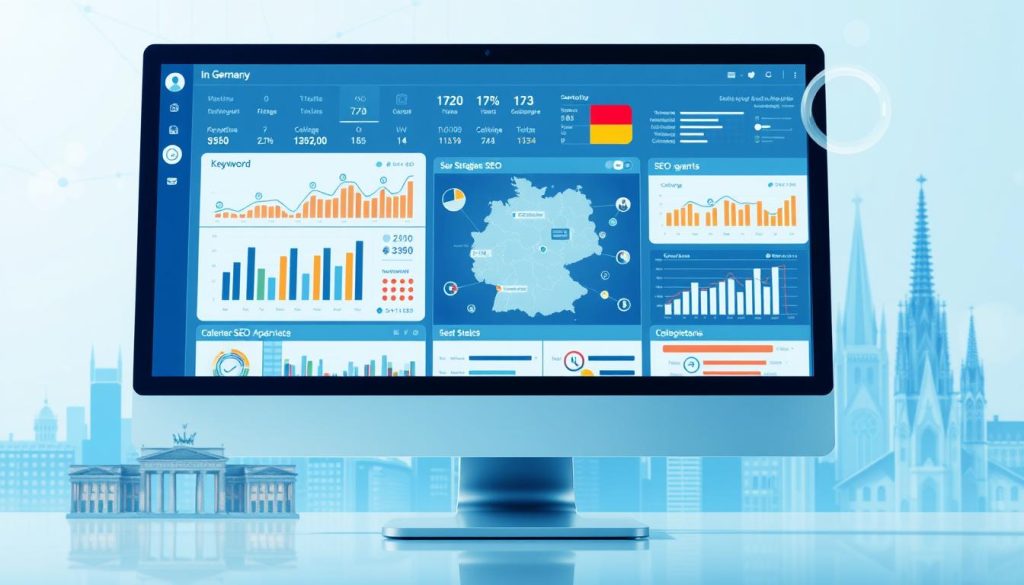
Leveraging SEO for Your German Venture
Starting a business in Germany means using smart SEO strategies. The digital market here has its own set of rules and challenges. It’s key to understand the local language and culture to connect with our audience.
Using local keywords is vital as search habits in Germany are different. Making our site SEO-friendly for the region can help us show up in searches. Also, focusing on mobile optimisation is important as more people use smartphones.
Getting backlinks from trusted German sites can boost our online presence. Working with local influencers and creating content together can help us build strong connections. This improves our reputation and gains trust from local customers.
Using analytics tools helps us see how well our SEO is working. This lets us make changes and get better over time. Being quick to adapt to market changes ensures our marketing stays relevant and effective.
Web Presence: WordPress Design and Maintenance
Having a strong online presence is key for any business wanting to succeed in Germany. More and more people are turning to digital platforms for info and services. Our WordPress services aim to boost this presence by aligning with local culture and standards.
Importance of a Strong Online Presence
A good website does more than just share info. It builds trust in the brand. In Germany, where digital is everything, our website is often the first thing people see. It’s all about creating a lasting impression through design and function.
Choosing a Reliable Web Hosting Service
Finding the right web hosting is vital for a smooth online experience. Web hosting in Germany offers many options for businesses. We look at speed, uptime, support, and how it can grow with us. LerriHost is a top choice, providing strong solutions that meet our needs.
| Hosting Provider | Performance | Support | Price (Monthly) |
|---|---|---|---|
| LerriHost | Excellent | 24/7 Live Chat | €10 |
| SiteGround | Very Good | Email & Tickets | €15 |
| HostEurope | Good | Phone Support | €12 |
| Ionos | Good | 24/7 Support | €8 |
Investing in top-notch WordPress services and reliable web hosting in Germany is smart. It boosts our online presence and helps us grow. This approach keeps our customers engaged, which is vital in the German market.
Nominee Services: Protecting Your Interests
In Germany, using nominee services is key for UK business owners. These services give a legal figurehead to stand in for the owners. This helps keep business interests safe while keeping things private, which is important in a competitive market.
Nominee services in Germany are great for keeping things private. By using a nominee director or shareholder, we can hide our identity from public records. This is very appealing to those who don’t want to share personal info.
It’s important to understand the legal side of nominee services. While they offer protection, we must follow German laws to avoid problems. The nominee must do what the business owner wants, protecting their interests.
In short, nominee services give a big advantage and help us relax. The right nominee looks after our interests, letting us focus on growing our business without worry.
Common Challenges Faced by UK Entrepreneurs in Germany
Starting a business in Germany is full of challenges for UK entrepreneurs. One big issue is understanding the cultural differences. German business culture values punctuality, formality, and detailed planning. This is different from the more flexible British way.
This difference can cause problems in communication and expectations. It makes it harder to set up a successful business in Germany.
UK entrepreneurs also face big market entry barriers. These include strict rules, tough competition, and complex taxes. Without knowing these, our businesses might struggle or fail. It shows how important it is to do thorough market research before starting.
Language is another challenge. Even though many Germans speak English, it’s not enough. We need to learn German or use translation services to connect better with clients and partners.
To overcome these challenges, we need to be aware and plan carefully. By understanding cultural differences, market barriers, and language issues, we can do better in Germany. This way, we can build a successful business there.
Creating a Business Plan for the German Market
A well-crafted business plan Germany is key for our entry into the German market. It must include a detailed market analysis. This helps us understand the competition, our customers, and what they need.
We also need to know who our target audience is. Knowing their likes and shopping habits helps us market better. Our research should cover cultural trends and how much people spend in Germany.
Financial forecasts are vital for our planning. We should predict our income, costs, and profits for the first few years. This plan helps us manage money and shows investors we’re serious and have a plan.
| Component | Description | Importance |
|---|---|---|
| Market Analysis | Assessment of competitors and customer needs | Informs strategic direction and product offerings |
| Target Audience Identification | Defining ideal customer profiles and demographics | Shapes marketing strategies and product positioning |
| Financial Projections | Estimating revenue, expenses, and profitability | Key for financial planning and attracting investors |
In summary, a good business plan Germany needs a solid market analysis, clear target audience insights, and strong financial forecasts. These elements are essential for success as we start this new venture.
Networking Opportunities in Germany
For UK entrepreneurs, networking in Germany is key to success. Trade fairs and industry events are great for meeting important people and sharing ideas. They help us build strong business connections.
Local business groups and chambers of commerce are also important. They offer networking chances and insights into the German market. We can get valuable resources and advice to improve our business plans.
Let’s look at some top networking spots:
| Event/Organisation | Description | Location | Frequency |
|---|---|---|---|
| CeBIT | A major technology trade fair focusing on digitalisation. | Hannover | Annual |
| Frankfurt Book Fair | The largest book fair in the world, ideal for networking in publishing. | Frankfurt | Annual |
| Local Chambers of Commerce | Provide networking events, training, and business resources. | Various | Year-round |
| Startup Nights | Events connecting startups with mentors and investors. | Major Cities | Monthly |
Using these networking chances can really help our business. We can make important connections, get local advice, and find partners or investors. A strong network is essential for success in Germany.
Market Research Techniques for Successful Entry
Starting a business in Germany needs deep market research. Knowing how to do market research in Germany is key for good entry plans. We can use different methods to get important insights, helping us make smart choices.
Surveys are a strong tool. They let us ask specific questions to people who might buy our products. This way, we learn what they like, how they act, and what they want.
Focus groups are another good way. They bring together people who might buy our products for in-depth talks. This helps us understand their feelings and reasons better. It adds to what we learn from surveys.
Secondary research is also important. We can use data from reports, government info, and industry studies. Sources like the Federal Statistical Office of Germany and market research firms give us key stats and trends.
Organising our findings helps us understand them better. Here’s a table comparing different market research methods:
| Technique | Purpose | Benefits |
|---|---|---|
| Surveys | Quantitative data collection | Direct insight into consumer preferences |
| Focus Groups | Qualitative feedback | In-depth understanding of consumer attitudes |
| Secondary Research | Analyse existing data | Cost-effective and time-saving insights |
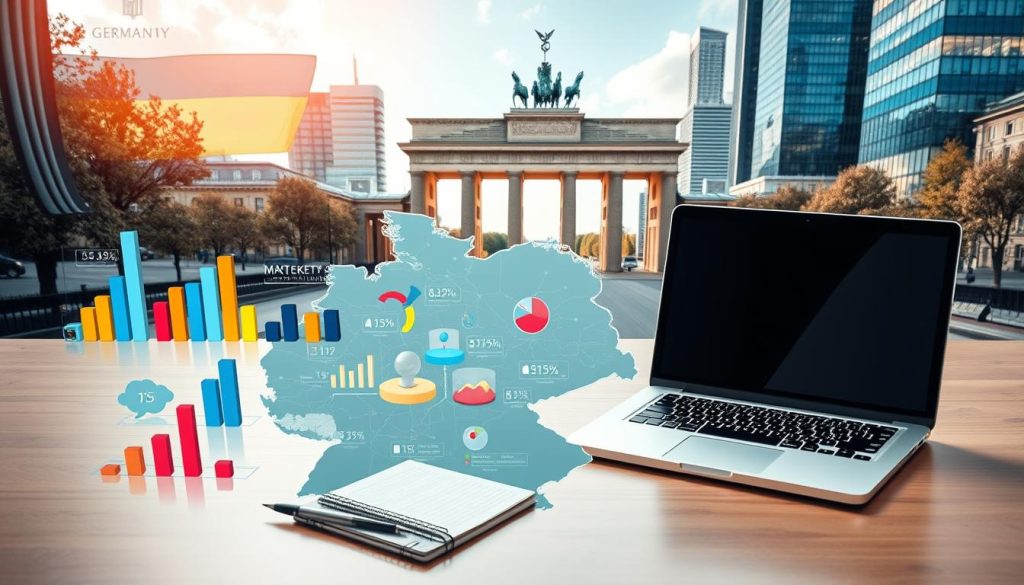
Using these market research methods helps us enter the German market well. Understanding the market through the right research leads to informed decisions. These decisions will connect with our target audience.
Resources and Support for UK Entrepreneurs in Germany
UK entrepreneurs heading to Germany find a lot of help. The country has many government programs to help us start and grow our businesses. For example, the German Accelerator and Invest in Bavaria offer great support and advice.
We also get help from business consultancy services all over Germany. These services give us specific advice on local rules, how to enter the market, and managing our business. Getting help from these experts helps us understand the market better and grow our businesses.
Also, joining local mentoring programs is very helpful. Talking to experienced entrepreneurs who have been through similar things gives us great advice and insights. All these resources together make sure we have the support we need to succeed in Germany.